Archive for the tag 'Makita'

Episode #9 - Drill It!

User ImageThe Handyguys March 13th, 2008

 
icon for podpress  Standard Podcast [29:06m]: Play Now | Play in Popup | Download

The Handyguys discuss and test drills

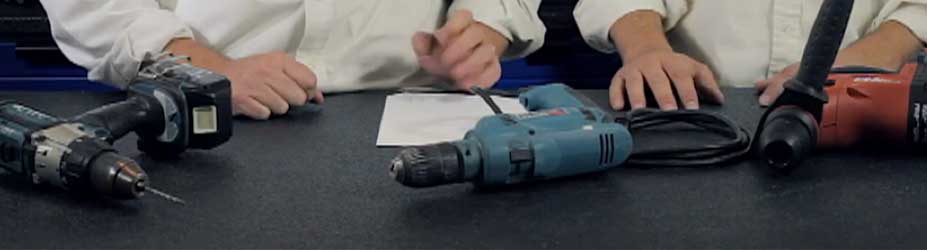
Drills - From left to right - Milwalkee #1630, Makita HP1621FK, old Craftsman, Makita LXT BHP451, Milwalkee Magnum 0234, Bosch LIon PS20, Porter Cable 9966In this episode, the Handyguys discuss the basic variety of drills. They also answer a couple questions about the the best drill to use for difficult jobs like putting large holes in joists and drilling holes in concrete.

There is an amazing variety of drills on the market today so it is difficult to know where to begin — cordless, corded, or lithium ion — contractor grade or low-end. Hopefully you can build a solid, standardized drill arsenal by listening to this podcast.

Aftermath of drill testsIn response to these questions, the Handyguys test out a table full of drills in the garage. For their tool challenge, they see which of the seven different drills can handle putting a large auger bit through a piece of tough oak. In addition, they set a cordless hammer drill against a corded hammer drill in a concrete hole contest.

Results of the 3/4″ auger bit through 5/4 Red Oak:

Corded vs cordless hammer drill test in concrete (2″ deep hole with 3/16″ tapcon):

Sphere: Related Content

Episode #5 - Compress It!

User ImageThe Handyguys February 14th, 2008

 
icon for podpress  Episode #5 - Compress It! [29:46m]: Play Now | Play in Popup | Download

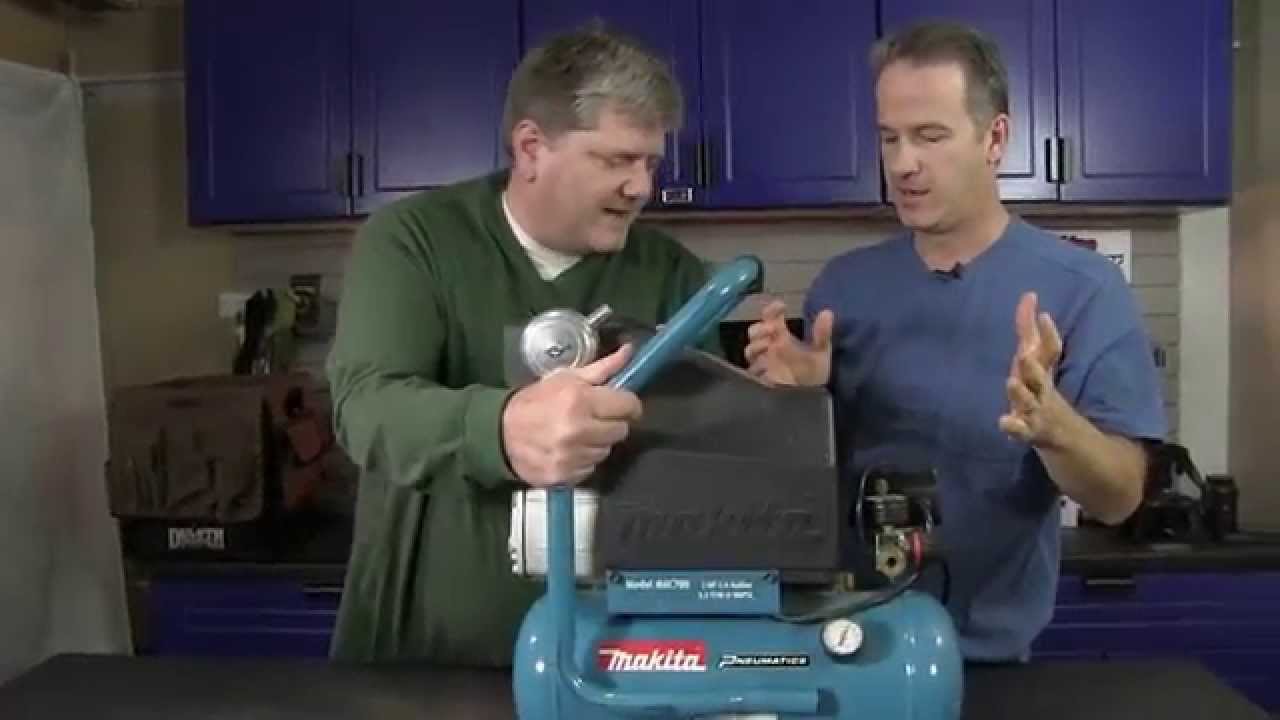
It’s time for another Handyguys tool challenge. On this show, the Handyguys take two very different compressors and run them through their paces. The listeners get to hear the difference between a small Makita MAC700 2 HP 2.6-gallon “hot dog” compressor and an older Porter-Cable compressor similar to the CPF4515 . Both compressors do a good job shooting framing nails into wood, but that is where the similarities end.

But does a handyguy or handygal really need a compressor? Is this something you need around the house? It all depends on the kind of work you will be doing. A compressor and pneumatic nailer are invaluable for trim work, crown molding, and framing. If you are going to finish your basement or have significant trim work around the house to complete, get a compressor. It will save a lot of time and hassle. For those weekend warriors, a compressor can’t be beat.

There are two basic varieties of compressors: oiled and oiless. The advantage of an oiless compressor is simpler maintenance — no oil or oil filter changes and no mess! However, the oiless compressors are generally very loud. While the oiled compressor is easier on the ear, they must be kept close to level at all times so the piston can be lubricated properly.

The other major differences between compressors is the tank size. The larger tank compressors can power tools that require large volumes of continuous air such as impact wrenches, grinders, and some paint sprayers. Pneumatic nailers use air in short bursts and can normally function well with smaller tanks. The smaller tanks are also much easier to move around. A large 20-gallon tank will not be very handy to move around the house to nail in baseboard trim.

So for about 90% of most household projects, the Makita MAC700 is the compressor to get. It is built like a tank, yet it does not blast your ear drums when the motor kicks in.

Once you get a compressor, you will need to get some pneumatic tools. There are hundreds of options. Normally you can just add some air tools as you need them. Typically you will start with a finish or framing nailer. For framing nailers, we like the full head framing nailer from Porter-Cable. There are generally two kinds of framing nails — clipped heads and round heads. The clipped heads have a “D” shape and allow you to get more nails within a clip. The downside is that some local codes do not allow the clipped heads. This is particularly true in hurricane prone areas. The round head nails look like typical nails.

Typical finish nailers include the 15-gauge angle nailer, the 16-gauge, and the 18-gauge. These nailers are great for baseboard trim, window casing, and crown molding. In addition, the 15-gauge can be used for hanging doors. The 15-gauge is the biggest, and it has a larger rectangular head which provides better holding power. Unfortunately it leaves a more drastic hole and requires more putty and sanding to hide the mark. The 18-gauge is the thinnest of the three and barely leaves a mark when it is nailed into finish trim. As a result you will not want to use it on heavy wood such as large crown molding.

For more information on compressors and nailers, tune in to this week’s Handyguys podcast.

Sphere: Related Content